Decoding the Cannabis Avery Label: Tiny Stickers Tell Big Stories.
Let's be honest, most people get their cannabis goodies and never look at the Avery label or do, and have no clue what it all means. But that little Avery label? It's basically a driver's license, report card, and birth certificate for your cannabis product all rolled into one. Learning how to read it can tell you where your product came from, how potent it is, when it was produced, who cultivated it, and whether it passed state-regulated safety and third-party testing required by the OCM, as well as its packaging and labeling. In this article, we will break down this tiny but meaningful sticker line by line.
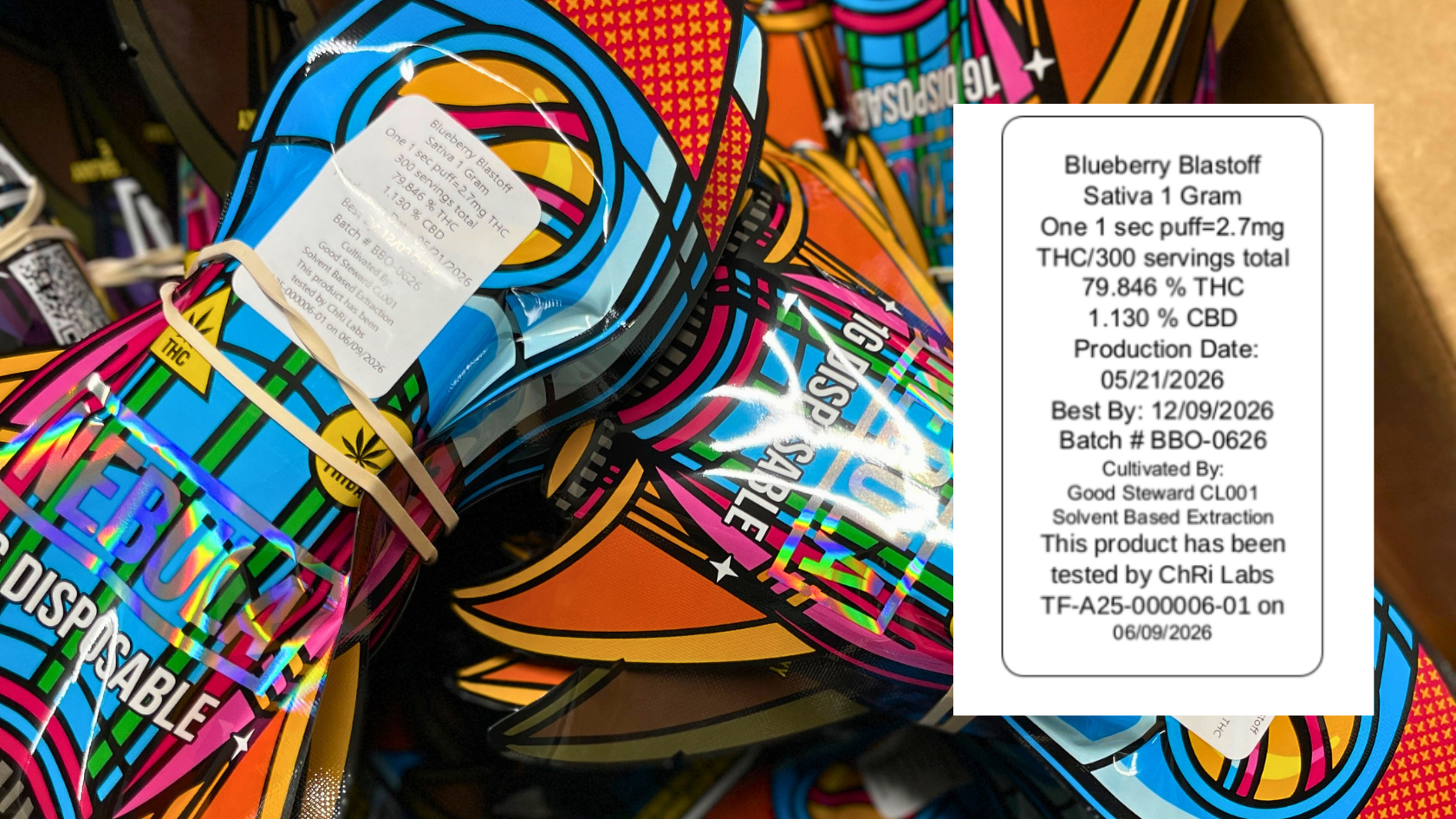
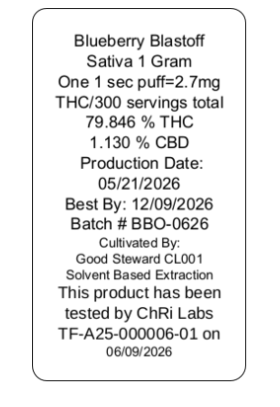
Product Name
Blueberry Blastoff
This is the product's name.
Manufacturers like Northstar Canna often use unique names to distinguish strains or flavor profiles. In this case, you would expect blueberry-forward terpenes and a sativa experience.
Type & Size
Sativa- 1 Gram
This line of the Avery label tells you two important things:
- Sativa refers to the product category, type, or intended effects. While everyone experiences cannabis a little differently, sativas are commonly associated with uplifting, energetic effects.
- 1 Gram is the amount of oil or concentrate contained in the cartridge.
Serving Size
One 1-second puff = 2.7 mg THC
Here is where the math sneaks its way in. Don't worry, we did it for you!
Instead of guessing how much you’re consuming, manufacturers estimate that a one-second inhale delivers about 2.7 mg of THC. This allows consumers to better control their dosage instead of playing the game “ well.. that hit felt small, or that hit was too much for me”
Total Servings
300 servings total
Since each serving is approximately 2.7 mg THC, this cartridge is estimated to provide around 300 one- second puffs. Of course, your lungs have their own opinion on what counts as a “one-second puff,” so we have to consider this as just an estimate.
Cannabinoid Percentages
79.846% THC
1.130% CBD
These percentages indicate how much of the extracted oil each cannabinoid makes up.
- THC is responsible for the intoxicating effects.
- CBD is a non-intoxicating cannabinoid that may influence how the experience feels.
Higher THC does not automatically mean a “better” product. Terpenes, solid methods such as Living soil, extraction quality, and overall formulation and manufacturing all play a huge factor. Don't let one number steal the spotlight; this is a team effort here.
Production Date
05/21/2026
This is when the product was manufactured. Think of this as the product's birthday.
With this date, you know when your product has been produced. Fresher products generally preserve cannabinoids and terpenes better, especially when stored correctly.
Best By Date
12/09/2026
Cannabis doesn't suddenly expire at midnight like Cinderella’s carriage. Instead, cannabinoids and terpenes slowly degrade over time. The best-by date helps indicate when the manufacturer expects optimal quality.
Batch Number
Batch # BBO-0626
Every production run receives its own batch number. Why does this matter? If testing finds an issue, or a manufacturer ever needs to conduct a recall, they can refer and identify exactly which batch-associated products were affected instead of pulling everything from their shelves. This is essentially the product’s fingerprints.
Cultivated By
Good Steward CL001
This identifies the licensed cultivator who grew the cannabis used in the specific product. Knowing the source helps with traceability and accountability throughout the supply chain.
Extraction Method
Solvent-Based Extraction
This explains how cannabinoids were separated from the plant. Different extraction methods produce different types of concentrates, but regardless of the process, every licensed product must meet the state testing requirements before reaching shelves and consumers.
Laboratory Testing
Testing by ChRi Labs
Test Date: 06/09/2026
Every regulated cannabis product must pass third-party laboratory testing before being sold. Most testing will screen for the list below.
- Potency
- Pesticides
- Heavy metals
- Microbial contamination
- Residual solvents
- Other specific state-regulated standards
This information gives consumers confidence that the product meets the state regulation requirements, not just marketing such claims.
Now that we have a better understanding of why this little sticker matters, it tells the story of your product, from the cultivator who grew it to the lab that tested it and the batch it came from. It helps everyone make informed decisions and enables regulators to trace products through every step of the supply chain. So, next time you think it's just a sticker with a bunch of ABC’s and 123’s, you can remind yourself it's actually the cannabis version of a product resume. Tiny, packed with information, and way more interesting and meaningful than it gets credit for.
Connect with us on Instagram with any questions you may have about your cannabis products avery label @North_Star_Manufacturing!

.png)